
Kassandra Zeni ‘27
EE Staff Writer
Every year, as January rolls around, dancers and non-dancers all around the world start to anticipate one of the largest college dance competitions in the U.S: the Universal Dance Association (UDA) Nationals. Held in Orlando, Florida in the ESPN Wide World of Sports Complex. There, college dance teams from around the nation travel to compete in categories of Jazz, Pom, and Hiphop. Over the years, this competition has gained an increasing amount of attraction by many people, even those who don’t dance, and many observers have started to determine their favorite team, and the one they want to win each year. Even myself, as a former dancer, anticipate the event every year and I am always excited to see the new types of performances, what will be different from the previous year, and more importantly who will win the national title.
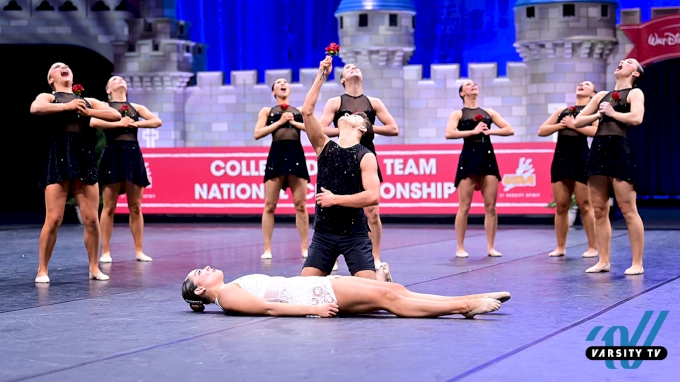
2024 was probably the biggest year for the competition itself, as it gained lots of appeal across multiple social media platforms. More specifically, the University of Minnesota and Ohio State University dance teams captured people’s attention with their two, very good, jazz routines. Both dances were loved by many, yet it also created a huge rivalry between the two teams, which is still present even today. Both teams were strong in every aspect: technique, turns, synchronization, and choreography, so how could you really determine who was the best?
The two teams started to develop extreme expectations and standards from the audience in 2024, and those expectations have only risen over time. Every year, Ohio and Minnesota are talked about online, with people arguing who is gonna take home the title this year, blatantly ignoring the many other teams that also compete in the nationals. This year, especially, people online were even talking about their disappointment in the two teams’ dances, arguing that they didn’t put in as much effort as previous years, even though countless hours were spent in the studio perfecting their routine. Minnesota even used the song “Maybe This Time” as a direct dig at the rivalry between the 2 teams this year. The dance was created in order to acknowledge these unrealistic standards that society has set for them and hopefully change the expectations throughout the dance world. Not only was this small message a breakthrough for the college dance community, but also the similarly competitive dance world, with constant comparison and standardization between very young boys and girls.
Although a friendly and fun competition, UDA Nationals has also created lots of negative stereotypes and expectations around college dancers, putting harsh pressure on both choreographers and dancers. It’s fun to judge the dances ourselves and watch them with our fellow teammates, but it’s also important to acknowledge the harmful effects our words might have on others. Next year, I am excited to see what comes back to the stage, yet also hopeful that college dancers won’t experience the same type of negative feedback as this year.
Photo courtesy: TV.Varsity.com