
Jude Magnotti ‘26
EE Editor-in-Chief
On Sunday February 8th, we witnessed a buildup to one of the most highly anticipated events of the year. A spectacle of lights, a cacophony of sound, an iridescent presentation of colors, all broadcast on national television in front of hundreds of millions of people. Of course, I’m talking about the Bad Bunny halftime show!
Originally announced back in September, the selection received mixed responses due to the majority of the artist’s songs being in Spanish which only 13% of the U.S. population speaks. Still, one thing was for certain, that both fans and critics alike could not wait to see what Bad Bunny would bring on Super Bowl Sunday.
Due to the lackluster nature of the teams playing and the actual game itself, many fans only cared about the halftime show as compared to the game. In fact, 10 million people turned off the game after it was done with many of them referring to it as, “The Bad Bunny Concert between two halves of a boring football game”.
However, what came with the show was not only one of the most creative halftime shows of the past decades, but arguably the most polarizing show in the Super Bowl’s history. First, a summary of what Bad Bunny actually brought to the half time show: His show opened with a cinematic showing Bad Bunny in a sugar cane field. Both the opening and the entire show played along with the growing trend of half time shows being made for cameras, not the people in the stadium. While this makes sense considering far more people watch the show at home, many have argued this robbed the people there of a complete Super Bowl experience. Especially considering how much they paid for the tickets.
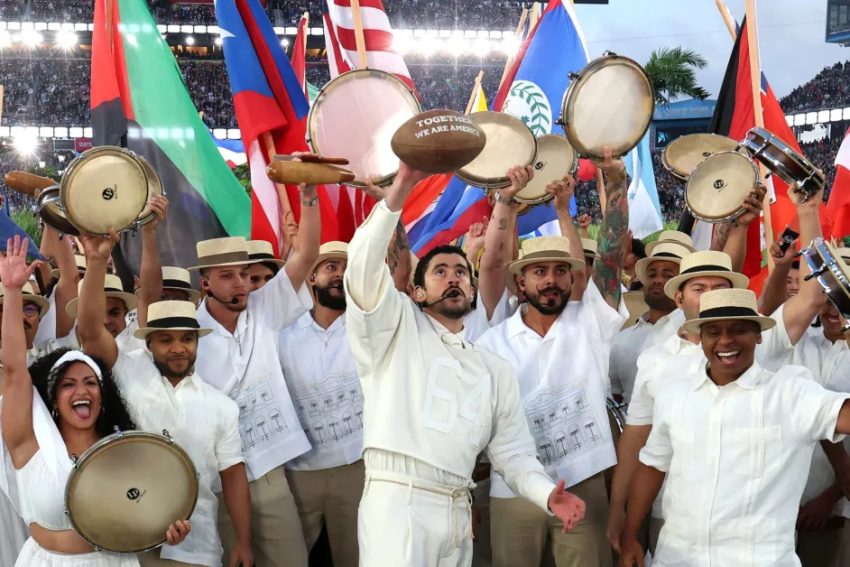
Opening in Spanish as expected, he wasted no time in making the show a cultural statement playing “Titi me pregunto” and featuring primarily hispanic dancers as bushes, workers, and more. This led into many high energy dance sections with that classic bad bunny atmosphere and many Bodega/street style set pieces and references. Soon enough, the show even turned into a story with Bad Bunny recreating a Puerto Rican street scene.
One of the sections even featured a real wedding between a couple in between dance numbers leading to a surprise appearance of Lady Gaga singing a salsa version of “Die With A Smile.” Ricky Martin, another latin pop star, also made an appearance symbolizing a passing of the torch between two generations of latino artists. Bad Bunny even shared an emotional moment with a young boy as he handed him his grammy trophy.
The show ended with the billboard displaying in english, “The only thing more powerful than hate is love”.
To start with the good, this show was absolutely one of the most unique and revolutionary shows of the past decade. Not only was it huge for a Spanish speaking artist to perform, but it served as a major representation of latino culture on the world stage with incredible storytelling, references, and overall messages throughout. This show was designed to combat the great divide slowly growing between people in our countries through representation of an underappreciated culture and a direct statement around the importance of cultural diversity in our country.
Despite the national language being changed to English by President Trump in March, 2025, this halftime show has again brought questions on whether the U.S. should be considered a multilingual country. Overall, this show was a spectacle, a story, a statement, and a celebration of cultural heritage all at once while championing the diversity of perspectives that makes America special.
However, the most revolutionary shows are often the most divisive. As previously mentioned, only 13% of Americans speak Spanish. This led many people who did not speak the language to complain that they were being precluded from a great half time show experience due to the language barrier.
Similarly, many people thought the show was more of a political statement than a concert. Some argued that a halftime show should be a neutral, fun form of entertainment for everyone rather than a message focused political statement directed mostly towards one group of people.
In addition, there were many people including myself who fell into a middle ground. People who respected the cultural importance of the show, but also felt like they couldn’t personally enjoy or connect with the experience much, making it less entertaining.
Finally, one of the main reasons the show became so divisive was because many became outraged by the explicit and vulgar nature of the artist’s lyrics. Despite the lyrics being in Spanish and many being unable to understand them, the translations still featured direct references to inappropriate acts and a litany of swears and curse words across. Similarly, most of the dance sections contained what some fans saw as “salacious dancing” further provoking more outrage.
Personally, I think much of this is the result of a double standard considering there has oftentimes been a history of a lack of censorship in the super bowl, but nonetheless it is a perspective many viewers share. Despite the polarizing nature of this show, it was undoubtedly forthright in its message and noble in its goal. Hopefully, in such trying times in our nation’s history, there will continue to be cultural expressions like these that remind us of the perspectives, cultures, and traditions that make America the melting pot it is today.
Photo courtesy: Kevin Mazur/Getty Images for Roc Nation
well said.I agree!☺️