
Jude Magnotti ‘26
EE Editor-In-Chief
Out of all of Shakespeare’s tragedies, Macbeth might be the one that is best described as a cautionary tale. A story of a lust for power so intense that it drives a once moral man to commit murder, treason, and other unspeakable acts in pursuit of fulfilling a prophetic prediction.
Driven by wild prophecies from witches and the urging of his ambitious wife, Macbeth transforms into one of Shakespeare’s most menacing figures as his mind slips closer and closer towards insanity.
However, Macbeth’s journey from hero to tyrant is not as black and white as it may seem. While it is easy to write him off as a murderous psychopath, it is the influences around him and his unwavering faith in them that prove the most influential in his turn to the dark side.
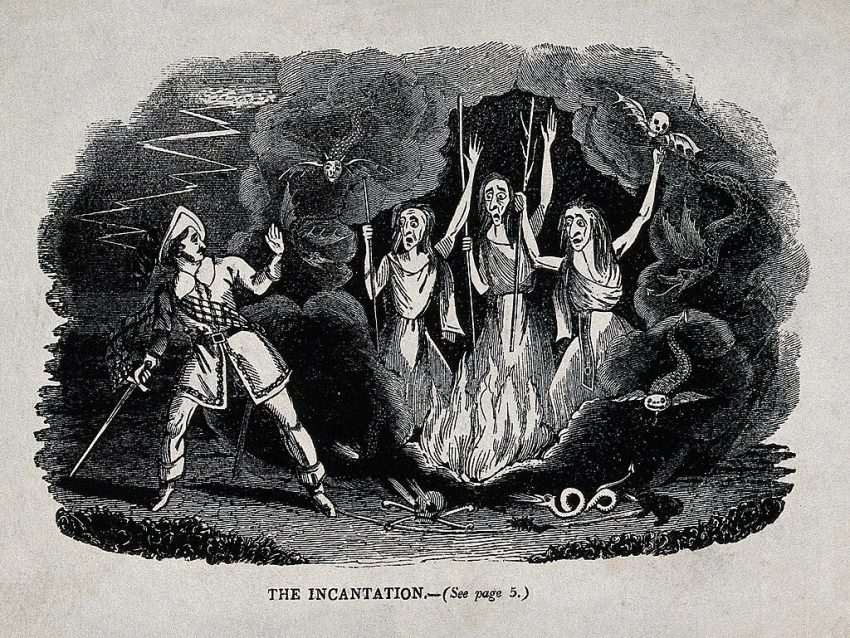
When we first meet Macbeth, he is a brave warrior, unequivocally devoted to his moral values and country. He is accompanied by his loyal friend Banquo, with whom he shares a deep bond of trust. Unfortunately, Macbeth’s staunch morals are disrupted by a decree from three weird witches that hail him as Thane of Cawdor and eventually as king.
However, after the king’s son Malcolm is named as the next heir, his thoughts turn from glory to murder. Frightened yet equally excited by the witches prophecy, his ambitions are only further exacerbated by Lady Macbeth. A woman of unrelenting ambition, she manipulates and persuades Macbeth into her plan of killing Duncan (The King) to elevate their status.
Despite Macbeth’s compunctions and moments of hallucination, he eventually does the deed and is guilt-stricken from his actions. He is later crowned King after Malcolm flees, and this is where he takes a full turn towards becoming a tyrant. Not content to just be king, he kills his best friend Banquo, who was predicted by the witches to father kings, in an attempt to secure royalty for his lineage.
Banquo’s ghost later returns to haunt Macbeth, which only further adds to others’ suspicions of Macbeth, particularly MacDuff. Warned by yet another prophecy from the witches, Macbeth murders MacDuff’s entire family, much to the dismay of his wife, who has herself become afflicted with guilt. She later commits suicide, and Macbeth is left alone to face an assault led by MacDuff.
He is killed, and his head is mounted on a pike as the memory of a once-brave soldier is snuffed out.
What caused Macbeth’s downfall? No one can firmly say, yet there are plenty of reasons as to why. Number 1 is his faith in his wife and in the witches’ prophecy.
Astonished by the witches’ prediction of his becoming Thane of Cawdor coming true, Macbeth surrenders himself to the word of the witches, tossing his morals aside. Had he stood firm on his own judgment and not so easily believed the witches’ speeches, he may have eventually decided against doing the deed.
Similarly, Macbeth originally decides not to murder Duncan, but is coaxed into it by his wife, who plays on his sense of masculinity and loyalty to her.
Despite his grief over killing Duncan, his spiral into tyranny can be attributed only to himself. At this point, he had already crossed the line and once he did there was no going back. He betrayed his king, his best friend, and his country as a whole in an attempt to satisfy his wife and claim power for himself.
While he remains steadfast in his evil towards the end, he eventually accepts his defeat and mourns his actions as the once great man meets his end.
What makes Macbeth so important is not just his betrayal itself, but the effect that it has had on every story written since. Anakin Skywalker, Walter White, every single story since draws its inspiration back to Shakespeare’s famous depiction of tyranny.
His story has been replicated time and time again and in doing so the themes of betrayal and its consequences remain loud and clear in fiction and in life. He may have been shifted towards evil by others, but in the end, it is his vaulting ambition that seals his fate as he descends back into fiction as yet another cautionary tale…
Image courtesy: Wellcome Collection CC BY 4.0