
Jude Magnotti ‘26
EE Editor-In-Chief
For thousands of years, Halloween has served as a staple of world Holidays. A spiritual cross between the worlds of the dead and the living, all mixed into terrifying, delicious candy candy-filled fun!
From haunted houses to chocolate stashes, Halloween is infamous for inspiring both terror and hunger in its victims. However, recently, things aren’t quite what they used to be. People just don’t seem quite in the spooky spirit, specifically, younger people.
While adult participation is still high, particularly with decorations and costumes, trick-or-treating rates have steadily declined. In a 2023 poll, 74% of respondents reported lower trick-or-treating numbers. This, followed by over 80% of people reporting a decline in 2024.
Somehow, the spookiest night of the year has turned into nothing more than a few disgruntled parents leading their children around. Similarly, participation in not just trick or treating, but Halloween in general, is at an all-time low.
Twenty-five percent of teenagers under the age of 19 report not having anything to do on Halloween night, and another 10% report having to work. This decrease in participation has also been followed by consequential outcomes, including both profits and participation at haunted houses being down.
Unfortunately, the same October flair that guided our parents’ childhood has slowly been more and more lost on the younger generation.
People have theorized many explanations for this, and the decline is largely attributable to a few key factors:
1: More kids report being “too grown up for Halloween.” There has been much debate around what age you can trick-or-treat until. Woefully, that age seems to be getting lower and lower in the eyes of children. Studies show that over 40% of children grow out of trick or treating by age 11 and over 75% by age 13. Trick or treating has, for some reason, slowly become out of style for children as they get older. While it is certainly reasonable to stop by age 16, the startling amount of kids stopped by age 11 suggests a shift away from traditional Halloween shenanigans.
2. Fewer people like being scared. While Halloween is all about sending a tingling sensation up your spine, fewer and fewer people seem to enjoy the thrill of a good fright. 40% of people report being dissatisfied with horror movies/entertainment, and another 30% report not liking being scared at all. While the screams of teenagers in movies may have filled our parents’ ears, they seem to be lost as people begin to treat it more as an annoyance than entertainment.
3. Increasing cost of costumes and candy. If you’ve ever walked into a convenience store and seen a 30 dollar bag of candy, you know how painful Halloween inflation can be. In addition to record highs in the price of candy, both costumes and decorations spike almost 30% in price once we hit October. Simply put, not as many people want to spend money on overpriced candy, and even fewer want to buy expensive costumes and decorations. While there are many factors attributable to the decline of Halloween, these 3 help best explain its fall from grace.
While parent and adult participation remains steady, without younger kids and teenagers to keep the spooky spirit alive, Halloween is slowly heading towards becoming yet another insignificant commercial holiday. I wish I could say there was an easy way to save it, but the reality is that it will all come down to the efforts and enthusiasm of the newest generation. And much like anything placed in the hands of Gen-Alpha, I solemnly have little faith in Halloween’s return…
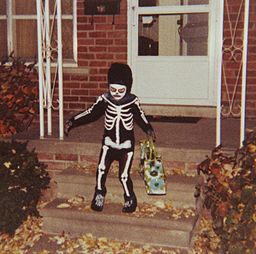
Photo courtesy: Don Scarborough, CC BY-SA 2.5, via Wikimedia Commons