
Ryan Rastgar Agah ’27
EE Staff Writer
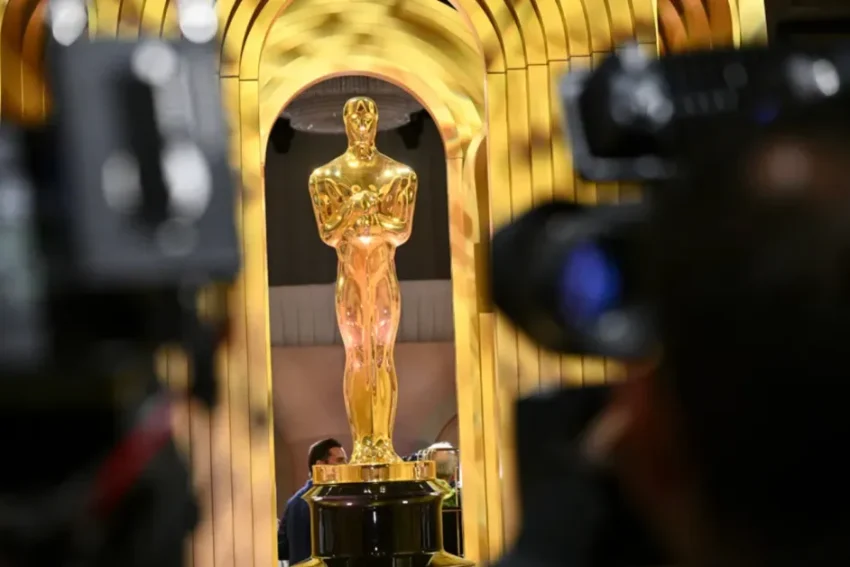
Every year the Academy of Motion Picture Arts and Sciences holds a ceremony, commonly known as The Oscars, to hand out awards and recognition to the best films and the best aspects of those films for a given year.
This year the Oscars will be held tonight March 15th, recognizing the films from 2025. Far and away the most significant award handed out on the night will be Best Picture. The film that wins best picture is forever etched into the public memory as it pertains to the year it was released, often as a reflection of that time. The movie that wins best picture has importance. The film chosen is almost never the most commercially successful or popular anymore, but it’s the one the Academy deems most deserving of that recognition. It’s the one that most deserves to be remembered for years to come.
Here I have ranked the ten Best Picture nominees for The 98th Oscars not by quality or personal preference, but by how deserving they are of the Academy’s adoration. More importantly, how deserving they are of your attention.
- Frankenstein: Guillermo Del Toro’s Frankenstein is by no means a bad film. A star studded cast and a seemingly infinite budget provided by Netflix make for a film that succeeds in every measurable aspect. It looks incredible, both in direction and production design. Jacob Elordi transforms into ‘The Creature’ through a process that took the makeup team ten hours each time. In that sense, the film is an artistic achievement completely. What it lacks compared to the other nominees is originality. Production and costumes can only take a film so far. Typically, these things heighten the immersion of a film that already holds thematic and emotional weight. Frankenstein doesn’t. Mary Shelley’s novel has been adapted and discussed for over two decades. The source material maintains its significance, but Frankenstein is an adaptation that can be viewed as too faithful. It fails to break any significant ground apart from bringing the story to life better than had ever been done in a visual medium before. It attempts to take big swings, but they don’t meaningfully separate the film from anything that came before it. It deserves all of the technical praise it has received, but not much more than that.
- F1: F1, similarly to Frankenstein, is a film that relies completely on its technical aspects more than its writing. Depicting a classic underdog story, in this case at the peak of motorsport, F1 doesn’t read like anything significant in a Wikipedia summary. A description of the plot would sound like your dad’s favorite movie from the 80s. A washed up racer with a tragic past teams up with a younger guy with a lot to prove. It’s a tired trope, but tired for a reason. For a film like this all the plot needs to do is move the audience between races and ensure that they are invested. In that sense, F1 accomplishes its mission. The writing is bland and uninteresting, but when the racing starts the film transforms completely. Stellar sound design and ludicrous filming techniques make the races themselves something to behold. The film recognizes its strength and draws these scenes out, but forgets to cut a lot of the ineffective narrative in between. It places above Frankenstein for at least being set in the modern day and adapting a sport rising in popularity as opposed to a novel two centuries old. Both films are outliers when compared to the rest of the nominees.
- Sentimental Value: This is a turning point in the list, as every film from here is absolutely worth your attention, and hopefully your time. Not everyone has dozens of hours to watch films they may not even like though, so films like Sentimental Value get sent to the back. Director Joachim Trier blends Northern European cinema with American cinema in a movie about movies. Full to the brim with outstanding performances (four acting nominations across three categories) and creative cinematography, Sentimental Value is as much of an ‘art film’ as exists in 2026. Relying solely on the strength of its writing and cast to win over the audience, the film will absolutely be seen as boring by a huge portion of the audience. It’s slow and unafraid to sit motionless in scenes that other movies would fill with tricks to keep the eye entertained. The film is also mostly in Norwegian with English subtitles. The primary reason it falls this low on the list despite the high quality of every aspect, aside from the slower pace, is that it’s a completely personal story. It’s about one family and not much else. It has little to say about the state of the world as much as it has to say about personal connections and the value of artistic expression. It’s not an uncommon theme this year (Hamnet and Sinners also touch heavily on these ideas), but it’s the only film that dwells solely in that deeply personal area. Some people will love it, many will find themselves moved by it, but more will find it completely forgettable.
- Train Dreams: The second of the two Netflix originals on this list, Train Dreams is the shortest of this year’s nominees. Despite that, it feels long and spread thin over its runtime. It does its best to depict a single man’s life, something very difficult to do in a film, but it succeeds in a way that’s almost outright shocking. It’s sad and hopeful and works as both a celebration and a contemplation of human life. It also touches on a lot of ideas that are more than relevant today, things like immigration and environmentalism, but never forgets to approach them from the perspective of its protagonist. Joel Edgerton quietly delivers one of the most solid performances of the year in one of the least dialogue heavy films of the year. Train Dreams also looks incredible and absolutely earns its Best Cinematography nomination. It contains the full range, from sprawling wide shots to very intimate close-ups. Similarly to Sentimental Value, the personal story will land for some, but be uninteresting to others. The form cannot be denied though, and it’s substantially more digestible due to its shorter runtime.
- Hamnet: Hamnet is my favorite of the nominees this year, but I cannot unbiasedly put it higher on the list. Directed by Chloe Zhao, who directed the Best Picture winning Nomadland, Hamnet tells the story of Shakespeare and his family and what led him to write Hamlet. It’s very upsetting, and sure to make a lot of people cry, but it’s also very uplifting and optimistic. Its story will affect more people than those of Sentimental Value or Train Dreams, but it’s still not arguable that the movie holds any significance outside of the emotion it evokes in the audience, no matter how strong it may be. The movie also boasts what may be the single best performance of the year in Jessie Buckley, the clear favorite for Best Actress right now. Jacobi Jupe also gives a really incredible child performance as Hamnet himself. The pedigree of the direction and performances make the film a standout purely for the execution. It won’t hold a lot of importance in our culture or politics, especially not when compared to the next few films on the list, but it’s absolutely the most emotional film of the year. Hamnet is a movie made to be felt, not overly thought about, and that’s okay.
- Marty Supreme: Marty Supreme is going to be a lot of people’s favorite of the year just because of how popular it has been since being released. It’s the last movie on this list that lacks political relevance, but maybe the first that really deserves to reserve a spot in the public consciousness long-term. It’s a fast paced film that takes its audience on a very bumpy ride alongside Timothee Chalamet’s Marty Mauser. Chalamet, one of the biggest rising stars in Hollywood, delivers another commanding performance to follow Dune: Part 2. He earned his Best Actor nomination, and seems really into the idea of winning it. The cast around him is also great, if a little strange, including Tyler The Creator and Kevin O’Leary alongside more serious actors like Gwyneth Paltrow and Odessa A’zion. Marty Supreme is gripping and will have lots of eyes glued to the screen, very in the style of director Josh Safdie’s other work. It may not be the most thematically deep, or even tonally competent, but Marty Supreme is absolutely the most exciting film on this list to watch for the first time.
- Bugonia: Yorgos Lanthimos has directed three films released in back to back years, the most recent of which being Bugonia. Lanthimos has become notorious for weird movies that take big swings, frequently with positive results. His last two films tried to push the bounds of the kinds of stories that could be told in film, and Bugonia is no different. On the surface Bugonia seems like an offbeat thriller about two conspiracy theorists who kidnap a businesswoman, believing her to be an alien. It develops into much more than that eventually and becomes an evaluation of the value of truth and humanity. Lanthimos’s weird style of filmmaking doesn’t dilute the serious subjects being broached, and it allows his audience to get more of an outside perspective on topics they’ve been exposed to their whole lives. It has a lot to say about the ongoing corporate revolution and its environmental and humanitarian impact. It does all of this while still being very funny and having a really ambiguous tone. I still can’t really tell you if the movie is taking itself very seriously or not. It’s very light on characters, only really having four, but both leads give very strong performances. Emma Stone has been cemented as one of the best actresses of the generation, but Jessie Plemmons has a lot more to prove and more than proves it in this movie. Bugonia will absolutely not be for everyone. It’s off-putting and strange, but very earnest and worth your time if you’re willing to be challenged by a film.
- The Secret Agent: The Secret Agent was initially a little lower on this list, but it’s only become more relevant in light of recent events in the news. It’s the second foreign language film on the list, being entirely in Portuguese. The Secret Agent is a historical drama set in 1970s Brazil and filled to the brim with political commentary. The Brazilian dictatorship no longer exists, but the film is not subtle in pointing out the similarities with many governments we can see today. It works as both a piece of Brazilian history and a look at the international future, spending more time establishing its environment than anything else. The city and the country are almost more significant than Wagner Moura’s character. He’s a victim of the facism that the film depicts and has almost no agency in the narrative. Moura still gives an incredibly strong performance, my favorite for Best Actor. He’s subtle and gives the ensemble around him time to shine, but is always capable of stepping in and commanding the audience. An authentic soundtrack and slowly building tension almost make it a political thriller, but the title is absolutely misleading. It’s not an action film. It’s a personal story, one that would have taken place almost five decades ago, but it’s one that can also be seen repeatedly in the news if you look hard enough. It would be in the interest of anyone who cares at all about history or politics to see The Secret Agent.
- Sinners: Sinners is almost definitely the most original and exciting of this year’s nominees. Ryan Coogler, most famous for Black Panther, delivers a completely new kind of horror movie, one dripping with style and subtext. Taking place in the post-Civil War American south, Sinners is about the reality for African Americans living there at that time. The first half of the film is sharply written and filled with characters who are really interesting and complex. Michael B. Jordan plays twin brothers and manages to really separate the performances, really giving the impression that they are two entirely different people. It’s an impressive feat of editing and acting that’s only a small part of what makes Sinners so great. Every single piece of the film was thought out and perfected, down to every detail. Every domino has already been set up by the time the film switches to supernatural horror and knocks them all down. It’s a combination of classic horror filmmaking principles and new-age ideas coming together to make a huge cultural touchstone for this era of film. Like The Secret Agent, Sinners has a lot to say about the time period where it’s set, but it also has a lot to say about the present day and how similar the two may be. The difference is that Sinners also manages to be about so much more. It manages to get the audience thinking about family, music and art, and the basis of human connection. Anyone who has even a passing interest in horror will be into Sinners, as well as anyone who just loves sharp and exciting filmmaking.
- One Battle After Another: The latest from Paul Thomas Anderson, One Battle After Another is maybe the biggest movie of the year, and of Anderson’s catalogue, in scope and in scale. While a lot of this year’s nominees are very heartfelt and personal stories, One Battle lets that be set dressing to the larger picture. It’s a film that could only have been released in 2026 because it is a direct response to the time in which it was made. The movie makes sure not to take a particular political stance. It’s less trying to make a point than it is just trying to encapsulate a moment in time. Both sides of the presented ideological argument are more flawed and complex than good and evil. In One Battle those two sides are spearheaded by the acclaimed performances of Sean Penn and Leonardo DiCaprio, and a neutral middle-ground is found by Teyana Taylor’s performance. All three have been nominated in their respective categories, and all three have a real shot at winning this year. Penn specifically is really spectacular in his role as a military officer in charge of border control. He’s scary and funny and weird all at the same time in an instantly iconic villain performance. The entire film walks that line between really funny and dead serious, taking the scenic route between the two to stop at heartfelt and tense. It’s absolutely a comedy, but one that doesn’t let attempts to make the audience laugh get in the way of the artistic vision of the entire work. The first half hour or so is a little misleading, but once you get over the hump the film changes its tone and pacing in a way that makes the last two hours blow by. When you take personal preference and taste out of the equation, One Battle After Another is by far the most important movie for anyone to watch from this year because it is so directly tied to this moment in American history, and it’s also just very good.
It’s not absolutely necessary to see any of these movies beforehand if you don’t intend to watch the show anyway, but you should not let the award results affect your decision-making process when you’re choosing which films to watch. Watch whichever ones you think you’ll like the most. They’re all nominated for a reason. None of them are bad movies; everyone is just a little different. There’s no accounting for taste.
Feature Photo Courtesy: Billboard
Mr. Rastgar Agah truly has a way with words. Although the rankings are opinionated, they are clearly not random, and each entry has a distinct, defensible placement. He does a great job identifying both what made each film succeed and where it fell short. What makes the article especially compelling is the framework he creates by judging these films based on how worthy they are of recognition, rather than simply on personal preference.