
Audrey Wu ’28
EE Co-Editor
The Philippines is an archipelago made up of over 7,000 islands, home to 82 provinces, 17 regions, 115 cities, and 118 million people, each with their distinct backgrounds and cultures. More than 180 languages are spoken throughout the country, including Tagalog, Cebuano, and Bikol. While a majority of Filipinos observe Roman Catholicism, many Muslim and indigenous peoples continue to maintain their religious traditions. The country also faces significant socioeconomic divisions as the top 10% of the wealthiest Filipinos control approximately 60% of all personal assets and national wealth as compared to the bottom 50% of the country, which only holds 4.5% of the country’s total assets. Despite all these differences, all Filipinos can unite in one thing: their love for their homeland, often referred to as the Pearl of the Orient Sea.
That blood connection extends far beyond Filipino borders. The Migration Policy Institute estimates that 10 to 12 million Filipinos are currently working and living abroad. This incredible diaspora accounts for roughly one-tenth of the entire Philippine population! According to the Philippine Statistics Authority, there are 2.05 million active OFWs, or Overseas Filipino Workers, with many employed in Saudi Arabia and the United Arab Emirates. These workers send remittances back to the Philippines to support their friends and families. In 2025, cash remittances totaled to an astounding $35.6 billion, comprising roughly 7% of the total Philippine GDP.
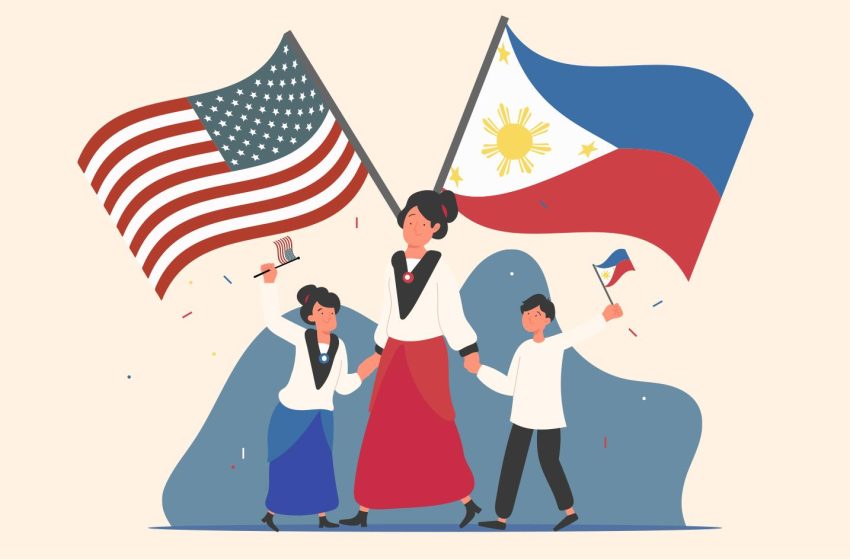
The United States is home to the world’s largest Filipino community outside of the Phillippines, with an estimated 4.1 to 4.6 million people of Filipino descent. Filipino-Americans, often called Fil-Ams, constitute the third-largest Asian American origin group in the US and are among the highest-earning ethnic groups in the country. With many educated Fil-Ams and Filipino immigrants, they have established significant presence in fields such as healthcare. In fact, roughly 50% of Fil-Ams hold a bachelor’s degree or higher and more than 25% of all immigrant registered nursed are Filipino. Behind these statistics, however, lies countless personal stories of migration, struggle, sacrifice, and cultural identity.
As the daughter of Filipino-Chinese immigrants, I’ve witnessed firsthand the power, drive, and determination that shape so many immigrant families’ experiences. For many Filipinos, moving abroad offers more opportunities for education, employment, and financial stability. Yet pursuing these incredible opportunities means living far from relatives, traditions, and the country they call home.
Filipinos are often characterized by their strong sense of community, generosity, and devotion to their loved ones. For many, the hope of building a better life extends much further beyond personal success and comfort; it’s about creating new opportunities for the next generation. Like many others, my parents left their support systems in search for a brighter future, one in which they were sure their children would thrive. Thanks to sacrifices like that f my parents, millions of Fil-Ams like me now get the privilege of education and countless opportunities that would otherwise, be inaccessible.
Despite the thousands of miles, Filipino culture continues to thrive across generation and borders. From large family gatherings full of karaoke and traditional cuisine to community festivals and the continued use of Filipino languages, Fil-Ams have found ways to preserve their heritage while adapting to life in a new country. At the same time, younger generations often navigate multiple cultural identities, learning how to balances familial traditions with the experiences of growing up American. In this way, Filipino identity continues to evolve and change- not by abandoning its roots, but by finding new ways to preserve them in an everchanging world.
Feature Photo Courtesy: GMA News