
Released exactly one week apart, Mother Mary and The Christophers are two films that share a lot of striking similarities. The most obvious is that they both star Michaela Coel alongside a beloved and longtime member of the film industry. In Mother Mary she performs opposite Anne Hathaway (who is set to have a great year between this film, The Devil Wears Prada 2, and The Odyssey), and in The Christophers she co-stars with Sir Ian McKellen. Both films focus almost entirely on the relationships between Coel’s character and that of her co-star, and both films use that relationship to ponder on ideas of art and human expression. Beyond the casting similarities, the films have a glaring similarity in the ideas they explore, but their differing approaches to those ideas may point to the stark difference in reception to the movies overall.
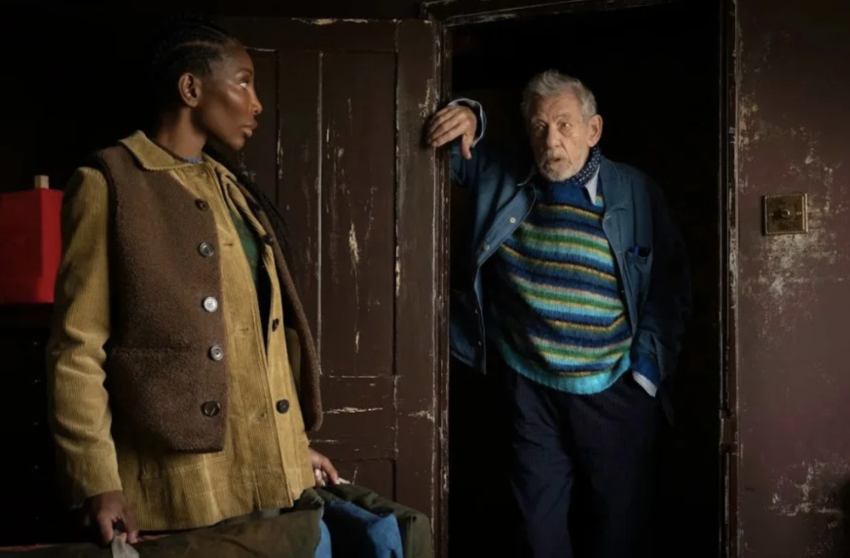
The Christophers is the latest venture from Steven Soderbergh. Known for Ocean’s Eleven, Erin Brokovich, and Magic Mike —you could say that he has range. Soderbergh has never been a director who sticks to one genre or subject, and The Christophers is another step in a novel direction for him. It follows art student Lori (played by Coel) in her effort to understand the man behind the work that inspired her as a child, Julian Sklar (played by Ian McKellen). It’s a slow-moving film, even at 100 minutes, and it focuses entirely on the relationship between its two characters and their art. Both of them feel as if they’ve failed in their art at their respective stages of their careers. Lori feels as if she was never given a chance because of the elitism of the industry, and Julian feels as if he’s lost the numerous chances he was given because of his unwillingness to conform to the industry’s standards. Their frustration leads to really meaningful conversations about each other’s art and what drives it. The titular Christophers are a series of paintings that Julian gave up on, and Lori has been tasked with convincing him to finish them by his children. They want her help for the inheritance money when the paintings are sold, but Lori agrees to get to the heart of what caused Julian to stop painting in the first place. McKellen and Coel both give fantastic performances, and Soderbergh’s expert direction makes sure that the film is cut of any excess and exists purely as a conservative exploration of two people’s art. It’s simple, yet soulful, and critics agree with the film scoring an incredible 97% on Rotten Tomatoes and a more than respectable 7.2 on iMDB.
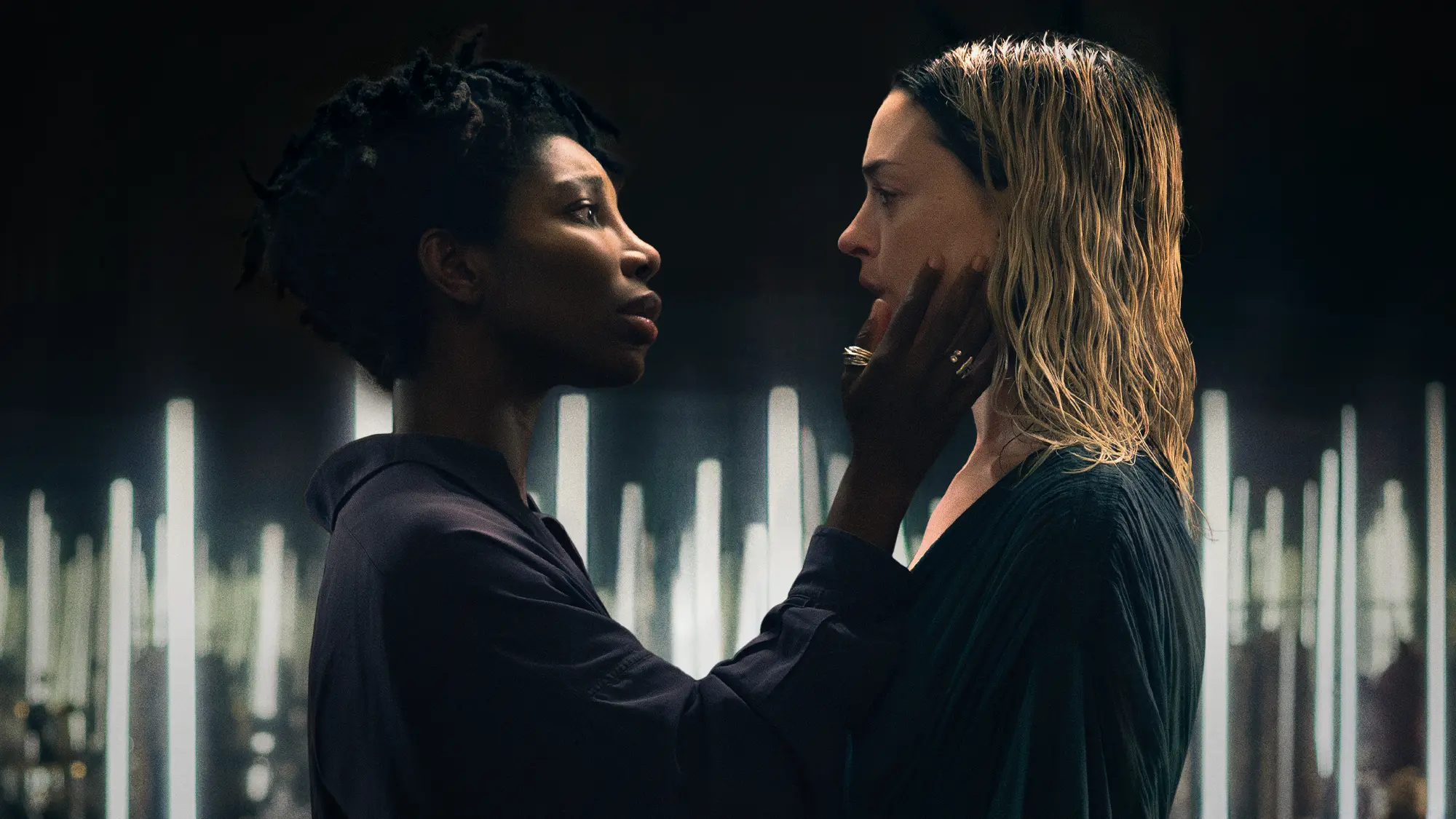 Mother Mary takes similar concepts and executes them on the complete other end of the creative spectrum. David Lowry (Pete’s Dragon, The Green Knight) wrote and directed the film, and the creative freedom he was allowed is fully visible in the final product. In very similar fashion to The Christophers, Mother Mary follows Michaela Coel as a young artist, this time fashion instead of paint, who helps a much larger artist find the root of their art and why they stepped away from it. In the case of Mother Mary, the artist takes the form of a pop-star played by Anne Hathaway who has an on-stage accident and is mounting a comeback years later.
The writing isn’t nearly as strong as The Christophers’ but the imagery is leaps and bounds ahead. Soderbergh restrained himself by allowing the rules of the real world to shape his narrative, and that results in a much more grounded and human narrative; but Lowry discards any ideas of the natural world and shapes his narrative with ghosts, metaphors, and dreams. It’s a heady movie. Instead of exploring the past of its lead through conversation, it uses high-concept ideas and weird, vaguely spiritual, experiences of psychosis. It’s much more of a visual spectacle, to the extent that I really wonder how some scenes were even filmed. It results in an experience that is entirely more memorable than that of The Christophers, even if it isn’t necessarily as obviously poignant. Coel plays a much less interesting role, and Hathaway isn’t near the mastery of McKellen, but the direction is the significant factor here. Films that push the boundaries of creativity and conventional narrative aren’t always received well, but Mother Mary did manage to review decently. A 72% on Rotten Tomatoes and a 6.1 on iMDB, it’s not near the acclaim of The Christophers, but it carves out its own niche and serves as a great subject of comparison.
The similarities between the films are absolutely striking. Both focus almost entirely on two characters, one of whom is played by Michaela Coel, the other a beloved industry veteran. Both focus on the same idea of art as a form of expression, and the things that may cause a person to avoid it. Both tell their stories in a deeply personal manner, even if they’re completely different in the actual approach. Both films are already on the back end of their theater runs, but they are due for a digital release in the near future.
The Christophers photo courtesy: Roger Ebert
Mother Mary photo courtesy: Deadline