
Jenny Hua ‘27
EE Webmaster
“No, no, no, no, no!” This viral line from the latest horror movie sensation Obsession is not just a vocal stim; it epitomizes the fears that plague the modern dating scene: toxicity, dissatisfaction, broken boundaries. Written and directed by Curry Barker, this film not only captivates audiences with its unnerving visuals, but also serves as a cautionary tale for young lovers about the dangers of superficial love. From the confusion of situationships to the egocentrism of capitalism, Obsession showcases the devastation of desires when human flaws are stretched too far.
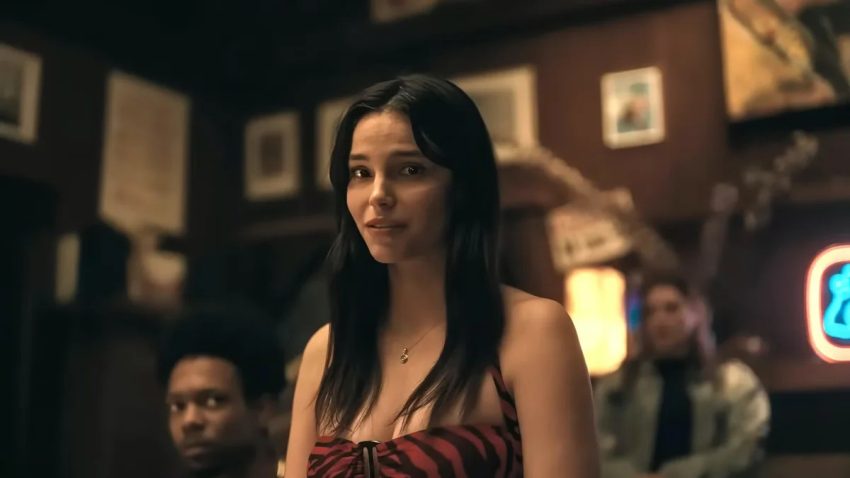
The movie begins with Baron “Bear” Bailey (played by Michael Johnston) attempting to win over his object of affection, Nikki Freeman (played by Inde Navarette), by buying her a replacement for the necklace she lost. However, a more appealing product catches his eye: a One Wish Willow, which, true to its name, grants one wish per person. He buys the willow instead, and when Nikki friend zones him, he snaps it, saying, “I wish Nikki Freeman loved me more than anyone in the f****** world.” This tragic catalyst is rooted in the modern anxiety of labelling relationships: today’s society equates the term “friend” with the total elimination of romantic possibility. Before Nikki labels their dynamic, Bear considers but isn’t fully compelled to take extreme action (i.e. make a wish) to achieve the relationship he desires. However, his breaking point demonstrates that a label as simple as “friendship” can implicitly narrow the scope of a connection until only a miracle seems capable of expanding it. And even when a miracle-maker such as the One Wish Willow appears, it may be too powerful, thereby damaging the wisher’s psyche. As a result, situationships—unlabeled dynamics—have become increasingly prevalent, avoiding this problem entirely by neglecting to set boundaries to be broken.
Obsession also examines the concepts of idealization and objectification through Bear’s evolving wishes. At first, he wishes for Nikki to love him the most because the idea he has formed of her in his head seems perfect, leading him to conclude that a romantic relationship between them would be equally pristine. She becomes an object, a prize to win, instead of a person with her own rights and emotions. Hence, Bear does not hesitate to violate her autonomy by making a wish to obtain her. However, once he succeeds, he realizes that he no longer wants the object in his head, the One Wish Willow’s exaggerated version forcing him to acknowledge that craving the pursuit and intensity of a lover instead of their individual human traits will not lead to an enjoyable relationship.
Furthermore, these ideas can be extended into a reflection of capitalism: the One Wish Willow is the system, obscuring its internal mechanisms while delivering instant gratification without regard for the human costs of its processes. Nikki’s objectification becomes commodification, her humanity stripped away as she becomes a product for Bear’s consumption. Bear even tries to return or “alter” his product to no avail, and the customer service call only contributes further to the analogy.
Overall, while terribly entertaining and horrifying to watch, Obsession’s value extends beyond cinematic excellence into an abyss of truths about humanity.