
Lola Karimi ’25
EE Managing Editor
One thing I can tell you for certain, as long as there have been little girls, there have been dolls. However, until the 1950’s, they were limited to baby dolls. While these are still popular today, they limit the aspirations that a young female can have. It molds you into what society wants you to be — a nurturer. Whether it be motherhood or a teacher, women have always been bonded to a small assortment of careers that allow men to pursue their dreams. That is, until Barbie was born.
Barbie has been around for generations and was an extremely popular toy for young girls. Barbie was a fashion doll created by Ruth Handler and manufactured by American Toy company Mattel. The first Barbie doll launched at the New York toy fair in March 1959 where 300,000 Barbie dolls were sold. Barbie’s success had only just begun.
Approximately 1 billion Barbie dolls have been sold worldwide since its creation. Throughout the many years that Barbie has and will continue to be around, she’s had over 250 careers. Barbie gives women the opportunity to not only be a stay at home housewife but also a lady on the town, fashionably dressed to express, and to impress.
You’d think that growing up a teenage girl would be just what it’s cracked up to be –makeup, slumber parties, and crushes on boys –but you’d be wrong. You’d be wrong if you thought we had even figured out equal pay. You’d be wrong if you said women have a choice in becoming a mother or not, in deciding what is beautiful or not. If you got the chance to live in our shoes, for even just a moment, you would see just how wrong you really are. Dead wrong.
I still remember crying in my bed, so utterly confused why the world seemed to be against me. From the moment I turned 13, something inside me had changed, my innocence was lost and I was no longer stuck in an everlasting childhood; I wasn’t a kid anymore and everyone made sure to treat me like it. I started feeling ways about myself I had never felt before: I now sucked in my stomach every time I passed a mirror, stopped raising my hand in class, and realized no matter how hard I try, the boy is always going to beat me in the race. Now, not only did the world around me damper my light, but my own mind served as a constant reminder of my inferiority.
While Barbie is much more than a toy today, it was not always so. Barbie has had a long history of problematic incidents in the past that have “set the feminist movement back fifty years” (says Sasha in the Barbie Movie). Obviously, Barbie has been known to promote unattainable beauty standards in young girls, which can lead to eating disorders and overall bad feelings of self worth. While having a thinner frame is never a bad thing- for a long time Barbie had limited their dolls to only being skinny white blonde girls –the lack of variation led the other 90% of the population to do things such as plastic surgery and use photoshop which worsens the cycle. The cycle we as a society have been stuck in for years.
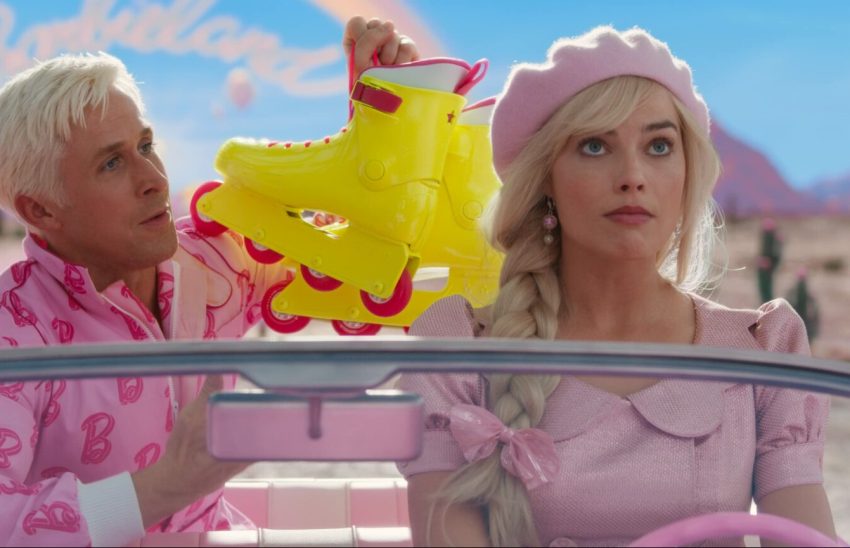
When society got word of a new movie release, women rolled their eyes in disgust and children marked the calendars to see another film where Ken’s Barbie sense starts tingling and he saves the day while she plays dress up in her huge closet. When the proposal for the movie was made public, it was just the opposite. The feel-good film, starring Margot Robbie and Ryan Gosling shocked the world the second it hit screens. While the first twenty or so minutes set up the environment of Barbie and how we would expect it to be, the film speaks volumes to both the new and old generations and challenges faced due to society’s “patriarchy”.
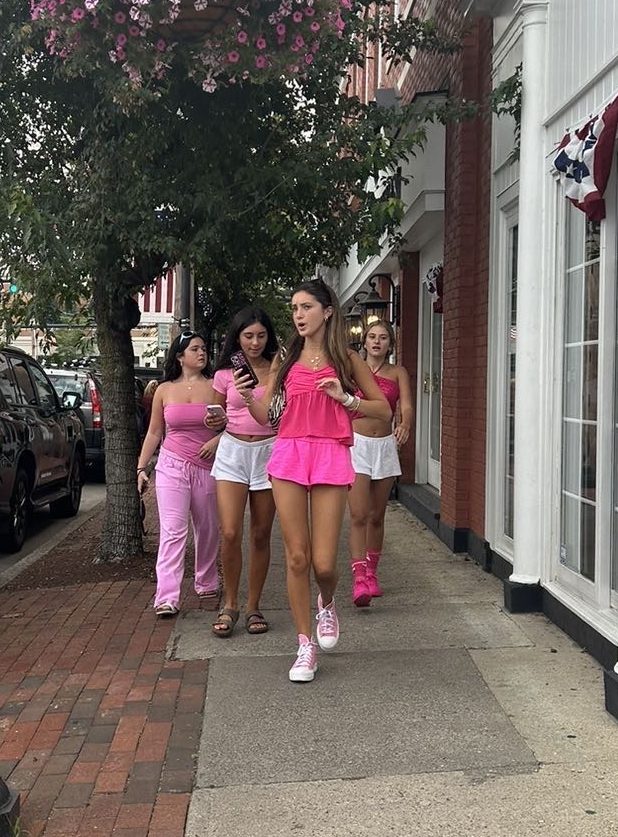
One of the biggest arguments against this controversial proposal was the effectiveness. There were an absurd amount of complaints about the “heavy” topic in a “children’s movie”. However, when Margot said in that interview that the movie was for everyone, she meant it! Men, women, adults, children, seniors, and babies put on their pink and showed up to the theater with heavy anticipation.
Throughout the movie, screens lit up the crowd with laughter and also caused them to burst into tears. I personally have never experienced such a well produced movie. I would argue that it put my thoughts and feelings into a visual –which not only allowed me to dive deeper into my emotions but also allowed others to sympathize with each other better. So… did it work?
According to a survey conducted by Resume Builder, 53% of viewers say Barbie improved their opinion of women in the workplace. Impressively so, it was also reported that two in three respondents said Barbie made them more aware of patriarchy in the workplace.
One minor detail the PG-13 movie failed to mention, however, is that Barbie was originally a sex doll. Originally the first ever female doll that acquired fully formed features was named Bild-Lilli. This was created with the intention of being a character that had a very adventurous life as a sex worker. For any reason other than the pleasure of a man, the idea of a female doll was “lacking mass market appeal”.
Women were even shamed for buying Barbie dolls when they eventually did come out because it was deemed inappropriate to have curves so suggestive on a children’s toy. However, Ruth Handler chose to face the backlash and keep them because of the idea that girls should feel empowered in their bodies and not be ashamed of them. It was almost like a privilege –first you get to play lawyer and now you even get breasts! Well, two nude blobs anyway.
Throughout the film, we see Barbie constantly trying to suppress any negative thoughts that might quiet the positivity she is supposed to represent. This perfectly captures the complication of a woman’s mind, always too sensitive and never thinking straight. Whether it be insecurities about self-images that society, social media, and men push on women, or as simple as having a human reaction to being cheated on, everything we do is put under a microscope. And judged –by everyone. “Women hate women, men hate women, it’s the one thing we can all agree on” (says Sasha in the Barbie Movie).
After the release of the movie, negative critics made much fuss on the over-inclusivity of the color pink- saying it forces gender roles back onto children and defeats the purpose of the movie. Keeping Barbie super girly and fashionable, instead, helps to break the notion that you can’t be both pretty and smart.
I have noticed that there are very different vocabulary words that civilization uses when describing men and women. While a man is acting strategically, a woman is being too calculated. Men are allowed to “react”, but all women can ever seem to do is over-react. When a man accomplishes something hard, he receives congratulations with “zero undertones of violence”, while women are usually greeted with a snarky comment covered in envy.
While Barbie is taken by Mattel, Ken decides to leave her and return to Barbie land… soon to be “Ken Land”. During her run for safety, Ken decides to take over the world that the girl he is said to be in love with owns… weird, I know. This highlights how easy it is for men to come in and take over, even when it is a system established for generations.
Music plays a major role in today’s society as it serves as one of the most popular ways of communication and expression of emotions towards one another. The songs in the Barbie movie lead us through the changes that generic barbie faces, helping us to understand how it is viewed through the eyes of a barbie. Billie Eilish wrote and produced a song for the film, titled “What Was I Made For?”, which has since gone viral on social media platforms such as Tiktok. This song is meant to show how every woman relates to Barbie, regardless of their looks or minds. We all empathize with Barbie and she encapsulates all of us.
Essentially, the idea is that we are a combination of all the past versions of ourselves, that they live through us, inside us. For some, a little girl with messy hair running around is closest to their heart, while for others it’s the future NASA astronaut building a spaceship out of legos. Whatever it be, all of our experiences have come together to make us the person we are today. I owe most of myself to my obsession with mermaids, Lady Gaga, and Tangled. For as long as I can remember, I have loved to dance. Not in the same way my ballerina sister Lucy can, but in my own way that mostly consists of a shimmy and flailing my arms all around me.
The song “Closer To Fine” by The Indigo Girls (1989) was also embedded into the character development Barbie faces throughout her world being turned upside down –or in her case, blue. Barbie is seeking for more, and is not satisfied with how she is living first, and then realizes the problem is bigger than her –it is the state of our society. This song plays three separate times to show the changes in her mentality. It highlights the moments we feel human: loss, love, and learning all that comes with it.
Looking back over my life after seeing this film, my perspective is entirely different. Remembering my worst moments, I can now see that the hurt and pain that I felt during those times actually shaped my future more than all of my best moments combined. When we crack, hit rock bottom, crumbling under the pressure of life, we are getting stronger. The years of our life that break us, make us.
There’s not much anyone who has experienced life as a female can tell someone who never will. But as a woman, it’s all you can think about, all you feel, and all you “are”. As a woman, advancing in a society configured by a male dominated perspective puts up not a wall, but a ceiling to which we may rise to. The idea here is to give up enough power so we can not directly complain, but will never be treated with respect the way a dude would be. After doing some research, I have come to the conclusion that gender-lens analysis seems to be the major issue being addressed as a whole for both men and women, boys and girls.
There is no doubt that the Barbie movie was successful, turning a doll symbolic of misogynistic sexual desires into a sister we all will continue to look up to. The shock Barbie faces when entering the real world forces the viewer to reflect on their own character and judgements. American citizens seem to have gotten too comfortable with all of their freedom and in turn have forgotten the simplest of manners and ways of treating people. The overall goal of this movie was not to start an anti-men movement, but to shine light on topics dimmed due to the uncomfortability of having these conversations and the sacrifices that have to be made for there to ever truly be equality. And shine she did.
I give the Barbie Movie 5 out of 5 stars.