
Audrey Wu ’28
EE Staff Writer
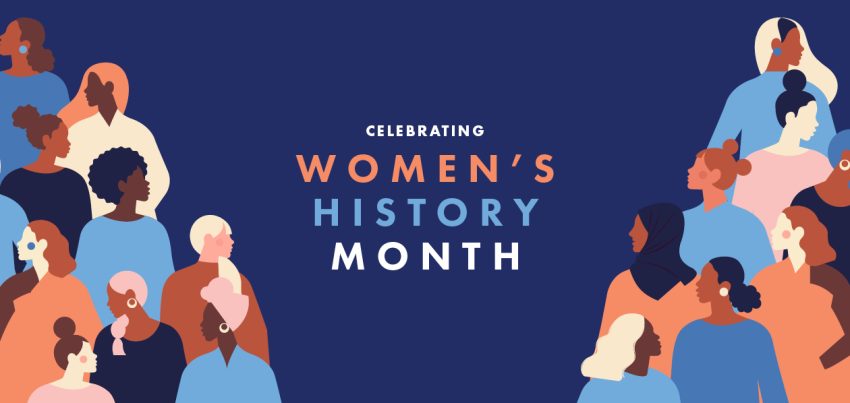
From classrooms to courthouses, hospitals to scientific laboratories, women have beaten extraordinary odds to shape the course of history. Every March, schools and communities across the United States recognize the achievements, significance, and influence of women throughout history. People are encouraged to commemorate and celebrate the incredible changemakers whose contributions have transformed societies across countless generations and the globe.
Modern-day Women’s History Month originated as “Women’s History Week” celebrated in Santa Rosa, California, in 1978. The Education Task Force of the Sonoma County Commission selected the week of March 8 (International Women’s Day) to celebrate women’s contributions to the nation. Following the initiative’s success, a large coalition of women’s groups petitioned for national recognition. Later, in March of 1980, Jimmy Carter officially declared March 2-8 as National Women’s History Week. As popularity grew, so did demand for an extension of the celebratory week to an official month. Finally, in 1987, Congress officially expanded the celebration to the entire month of March. Key organizations such as the National Women’s History Alliance played a critical role in advocating for national recognition and continue to contribute to celebrations.
Women’s History Month highlights many women whose courage, determination, and perseverance transformed our society. Individuals such as Ruth Bader Ginsburg (who promoted gender equality), Malala Yousafzi (who advocated for girls’ education), Rosa Parks (who fueled the Civil Rights Movement), and many more are honored and celebrated. These powerful figures reflect a broader account of countless women who have transformed the world, even when history did not give them credit.
While Women’s History Month celebrates achievements, it also highlights the ongoing challenges women face. Gender stereotypes often minimize female power and portray women as “less” than men. Moreover, women remain underrepresented in certain roles, especially in politics and STEM careers. Furthermore, sizeable gaps in pay and access to opportunities for education, medical care, and legal rights remain. Women continue to struggle in receiving equal treatment as discrimination and sexual harassment remain prevalent in the workforce. By spotlighting and contrasting progress and inequality, this month is critical for motivating action.
Women’s History Month is so much more than a simple tribute to the past- it is an investment in the future. By learning about the fearless women who paved the way for society today, young people are further inspired to envision a broader future for themselves and others.
Feature Photo Courtesy: NYC Public Schools