
Alexis Abellard ’26
EE Staff Writer
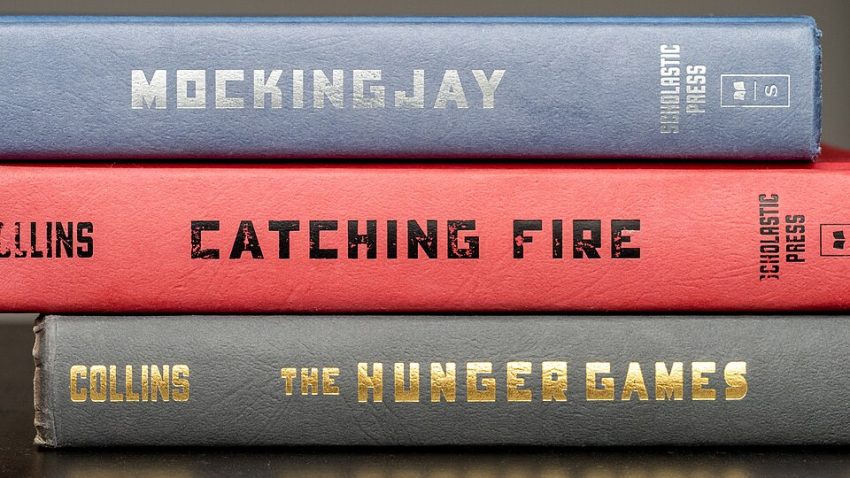
It is hard to ignore the quiet return of young adult dystopian novels to everyday conversation. Books that once defined a generation are showing up again in the classroom, on social media, and in late night discussion between friends. Among them, The Hunger Games stands out, not just as a popular series, but as something that feels newly relevant.
When Suzanne Collins first introduced the country of Panem, readers were drawn in by survival, romance, and rebellion. At the time, many saw the book as dramatic fiction, a distant “what if” alternate reality. Now, years later, the story reads differently. The Capitol’s obsession with spectacle, the manipulation of media, and the stark class divides between the capitol and its districts feel less like fantasy and more like a not too far fetched exaggeration of reality.
But renewed interest in these books is not only about politics, it is about how people process uncertainty. Teen readers especially are looking for stories that acknowledge fear while still offering control. Katniss Everdeen is not perforated, often hesitant and overwhelmed. But those traits are exactly why she is relatable. She reacts in a manner many people can imagine themselves possibly doing.
YA dystopian novels give readers a direct way to confront chaos, by tackling issues through the character’s point of view. Readers take complex problems and place them in a world with clear rules, clear enemies, and the possibility of change, something that reality rarely offers. In a time when the future can feel so unpredictable, these stories provide audiences with something to steady themselves. Something to remind readers that even in complex, and at times controlled societal systems, individuals can make change.
Social media has further amplified this return. Clips, quotes, and edits from The Hunger Games circulate widely, often paired with commentary that draws parallels between fiction and real life. The conversations concerning such media are not always direct or overly political, but the connections are ever present. A line here about control, a scene there about resistance, or even just the image of the arenas can spark reflection.
Simultaneously, the resurgence in popularity of YA dystopian books is fueled by something more personal: a new perspective. Many readers who grew up with these books are revisiting them, bringing about new conversations shaped by age and experience. What once felt like an adventure, a way to escape reality for a few hours, now carries weight. The emotional core remains the same, but the meaning behind the words deepens as each individual makes personal and unique connections to issues in the text and issues facing society today.
This return also invites new readers into the genre. For those who did not experience the original wave of YA dystopia, these stories feel fresh, not yet relics of the past. Rather, they are introductions to a type of story telling that asks difficult questions in an accessible way.
In the end, the renewed focus on YA dystopian novels is not surprising. These books were never just about imagined futures. They were always about human behavior under pressure, about power, survival, and choice. Themes that do not expire.
If anything, the current moment has made them harder to ignore.
Photo courtesy: ajay_suresh, CC BY 2.0 via Wikimedia Commons